
How Do You Get Enough Protein When You're Not Hungry?

Quick tip: Eat protein first, spread it across the day, and lean on lower-volume protein foods like eggs, Greek yogurt, fish, and nut butters. A shake can help when solid food doesn't appeal. And pair it all with strength training, because protein alone isn't enough to support muscle.
Here's the catch. When your appetite drops, protein is often the first thing left on the plate. It's filling and it takes effort to eat, which is exactly why it needs a plan.
Why protein needs more attention on GLP-1 medications
People taking GLP-1 medications often eat considerably less, which is a desired result. However, the lack of protein intake can negativily impact overall health. A 2025 joint advisory from four nutrition and obesity medicine organizations names protein as a priority during GLP-1 use. It pairs that with a structured strength training program.1
The advisory notes that low protein intake from reduced appetite may contribute to muscle loss. That concern runs higher for older adults, people going through menopause, and anyone who isn't strength training.1
How much protein do you need when your appetite is smaller?
There's no single number, and the advisory is candid about that. Here's what it lays out:1
- The general adult recommendation is 0.8 grams per kilogram of body weight per day.
- Higher targets of 1.2 to 1.6 g/kg have been proposed for some people.
- An absolute target of 80 to 120 grams a day may be simpler to follow.
- Intake shouldn't drop below 0.4 to 0.5 g/kg, and long-term intake at or above 2 g/kg should be avoided.
Your care team is the right place to set your number, since the best reference weight to use is still debated.
Which protein foods fit small portions?
Volume is the enemy when you're full fast. The advisory points to lower-volume, nutrient-dense protein foods:1
- Eggs
- Fish and seafood
- Greek yogurt and cottage cheese
- Nuts, seeds, and their butters
- Beans, peas, and lentils
- Lean poultry
It generally encourages plant sources, dairy, seafood, eggs, and lean poultry, and suggests keeping red and processed meats moderate.
Does it matter when you eat protein?
Yes, in two ways. First, eat protein-rich foods at the start of a meal. The advisory recommends this so protein gets eaten before you fill up.1
Second, spread it out. One controlled study compared two ways of eating the same daily protein. Spreading it evenly across three meals led to higher 24-hour muscle protein synthesis than eating most of it at dinner.2 If you eat small meals, give each one a protein anchor. Our guide to what a balanced mini-meal looks like shows how.
Why strength training belongs in the plan
This is the part most protein advice skips. The advisory states that more protein alone is likely inadequate to maintain muscle without structured resistance training.1
It recommends strength training at least three times a week plus at least 150 minutes of moderate aerobic activity, scaled to your fitness level. Check with your clinician before starting.
Where a plant-based meal shake fits
Some days, chewing through a chicken breast isn't happening. A shake is easier to finish. The advisory notes that some people meet protein targets with high-protein shakes and fortified foods.1
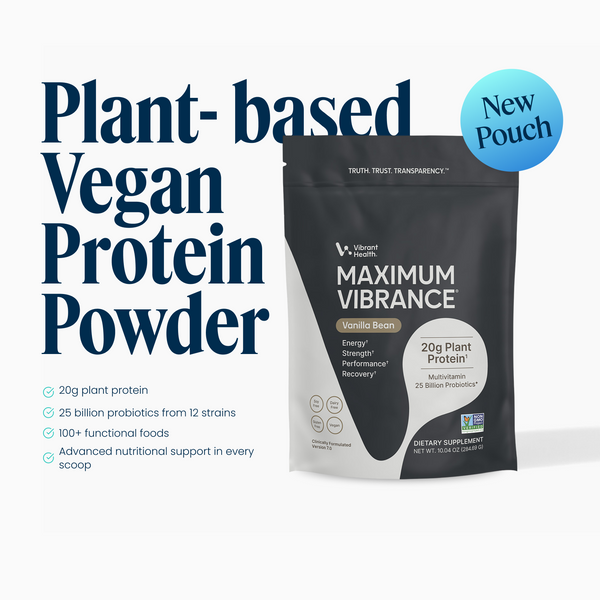
Maximum Vibrance is a plant-based meal shake with 20g of plant protein per two-scoop serving, at 150 calories in Vanilla Bean. It also carries 100+ functional foods and an organic multivitamin, so the protein arrives with company. One scoop gives you half the protein as a lighter snack.
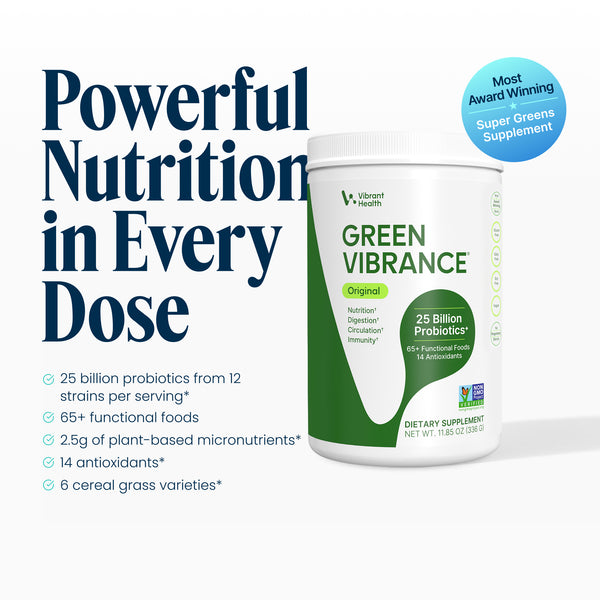
Prefer to keep protein from food? A scoop of Green Vibrance in your smoothie adds greens and 3g of fiber in 40 calories, without crowding out room for protein.
The takeaway
Getting enough protein with a small appetite comes down to order, spacing, and density. Eat it first, give every meal some, choose compact sources, and train your muscles so the protein has a job to do.
For the bigger picture, see what to eat when your appetite is smaller.
 |
 |
|
Shop Maximum Vibrance Vanilla Bean → |
Shop Green Vibrance → |
Frequently Asked Questions
How much protein should I eat on a GLP-1 medication?
A 2025 joint advisory notes the general adult recommendation of 0.8 g/kg per day, proposed higher targets of 1.2 to 1.6 g/kg for some people, and an alternative absolute target of 80 to 120 grams a day.1 Your care team can help you choose.
What are easy high-protein foods when I have no appetite?
Lower-volume options work best: eggs, fish, Greek yogurt, cottage cheese, nuts, seeds, nut butters, and lentils. These deliver protein without much bulk.1
Are protein shakes okay while taking a GLP-1 medication?
Many people use them. The advisory notes that some people meet protein targets with high-protein shakes, bars, and fortified foods.1 Check labels for protein per serving and added sugar.
Should I eat protein first at meals?
Yes. The advisory recommends eating protein-rich foods first so you get them in before you feel full.1
Do I need to strength train if I'm eating enough protein?
Yes. The advisory says protein alone is likely inadequate to maintain muscle without structured resistance training, and recommends strength work at least three times a week.1
Sources
- Mozaffarian D, Agarwal M, Aggarwal M, et al. Nutritional priorities to support GLP-1 therapy for obesity: a joint Advisory from the American College of Lifestyle Medicine, the American Society for Nutrition, the Obesity Medicine Association, and The Obesity Society. American Journal of Clinical Nutrition. 2025;122:344–367. https://doi.org/10.1016/j.ajcnut.2025.04.023
- Mamerow MM, Mettler JA, English KL, et al. Dietary protein distribution positively influences 24-h muscle protein synthesis in healthy adults. Journal of Nutrition. 2014;144(6):876–880. https://pmc.ncbi.nlm.nih.gov/articles/PMC4018950/
This article is for informational purposes only and has not been evaluated by the FDA. This product is not intended to diagnose, treat, cure, or prevent any disease.
Why Trust Vibrant Health?
At Vibrant Health, we've been pioneers in science-backed nutrition for over 30 years, formulating transparently sourced superfood supplements that prioritize real results. Our blog is an extension of that commitment—a trusted resource for expert-driven wellness insights.
Every article is crafted with nutrition expertise, backed by the latest scientific research, and reviewed by our in-house Certified Health Coaches and Product Educators. We break down complex health topics into practical, actionable advice—helping you make informed choices about superfoods, supplementation, and holistic wellness. As a brand that has earned thousands of 5-star reviews and the trust of health professionals, we ensure that our content reflects the same quality, integrity, and transparency as our products.
Your wellness journey deserves accurate, credible, and empowering guidance. That's why Vibrant Health's blog is here—to help you live a healthier, more vibrant life, backed by real expertise
Jodi Schneider
Certified Health Coach and Product Consultant at Vibrant Health
Jodi Schneider is a Certified Health Coach and Product Consultant at Vibrant Health, with a Nutrition and Healthy Living Certification from Cornell University. For nearly six years, she's helped customers navigate their wellness journey, making nutrition simple and approachable. Passionate about holistic health, she believes wellness is about balance—nourishing the body, staying active, and caring for emotional well-being. Outside of work, you'll find her hiking with her dogs, meditating, or fueling her day with Spectrum Vibrance
Next to Read
Health
Which Form of Zinc Is Best Absorbed?
A zinc label lists milligrams, not how much you'll absorb. We compared the human studies on citrate, gluconate, glycinate, picolinate, and oxide, then looked at what else moves absorption: phytates, iron, and timing. You'll see which forms have real data behind them and how to stay under the upper limit.November 09, 2026
HealthWhat Should You Eat When Your Appetite Is Smaller?
October 31, 2026
HealthType I vs. Type II Collagen: Which One Matters for Joints?
Type II is the collagen in your cartilage, so it gets called the joint collagen. But the word after the type number matters more. We break down hydrolyzed vs. undenatured collagen, the doses each is studied at, and what three trials in active adults actually found.
October 19, 2026

Start Feeling Your Best Today
You know what we stand for, now it’s time to experience it for yourself. Start your wellness journey with trusted formulas that support real, lasting change.

Free Shipping on Orders $55+
Skip the fees—shipping's on us when you spend $55 or more.

30-day Satisfaction Guarantee
Not feeling the difference? Return it within 30 days—no questions asked.

Subscribe & Save
Stay consistent, save money—get your favorites delivered on your schedule.
As Seen In


