
Bitter Melon Extract vs. Whole Bitter Melon: What Changes?

Slice a bitter melon open and most of what you're holding is water. That single fact drives the whole comparison. If you're choosing between cooking the fruit and taking a capsule, you're really choosing how much plant material you get per serving, and what you're willing to leave behind to get it.
An extract concentrates a narrow set of compounds and sheds most of the fiber, water, and heat-sensitive vitamins. Whole bitter melon keeps all of it at food-level amounts, along with a flavor that stops a lot of people from eating it twice. Neither one is the upgrade. They're different tools, and the label is where you find out which one you're actually buying.
What an extract actually is
Extraction is a sorting process, not a strengthening one. A solvent moves through dried plant material and carries out whatever dissolves in it. Everything that doesn't dissolve stays behind and gets discarded.
Bitter melon carries several distinct classes of compounds, and they don't all behave the same way in a solvent. Published compositional reviews group them roughly like this:1
- Steroidal glycosides, including charantin
- Cucurbitane-type triterpenoids and saponins
- Phenolic acids and flavonoids
- Polysaccharides
- Proteins and peptides
A water extract and an ethanol extract of the same fruit are not the same product. They'll carry different compounds in different proportions, from the same starting material.
Why the solvent matters more than the ratio
Here's the part most supplement labels skip. Researchers testing charantin recovery from bitter melon fruit found that acetone and ethanol pulled it more efficiently than dichloromethane or water.2 Same fruit, same target compound, meaningfully different results depending on what ran through it.
Scale matters too. In one optimized ultrasound-assisted extraction protocol, charantin came out at roughly 3.1 mg per gram of dried fruit.3 That's a small fraction of the material by weight, which is worth remembering when a label leads with a big concentration ratio. A 10:1 ratio tells you how much raw material went in, not how much of any compound came out.
If a bitter melon supplement lists a ratio but not the solvent, the plant part, or a marker compound, the ratio is doing more marketing work than informational work.
What you give up in an extract
Concentration costs you the matrix. A 100 gram serving of raw bitter melon carries about 2.1 grams of dietary fiber along with 21 calories.4 Almost none of that fiber survives into a capsule, because fiber is exactly the kind of insoluble material extraction leaves behind.
Heat-sensitive nutrients take a hit before extraction even starts. Bitter melon has to be dried first, and drying conditions measurably change what's left. In one study of low-temperature microwave-assisted drying, both vitamin C and total phenolic content degraded faster as microwave power and drying temperature went up.5 Powder production adds another variable: research on spray-dried bitter gourd powders found that the carrier material used during drying changed retention of flavonoids, saponins, and vitamin C.6
None of that is a knock on extracts. It's just what an extract is for. You're trading breadth for a repeatable dose of something specific.
What you give up in the whole food
Two things, mostly.
The first is obvious the moment you taste it. Bitter melon is genuinely bitter, and for a lot of people that's a one-time experiment rather than a habit.
The second is consistency. Compound content in bitter melon shifts with cultivar, maturity at harvest, growing conditions, and how it's cooked. A vegetable doesn't come with a specification sheet. That's fine for dinner and unreliable for a daily routine you're trying to keep steady.
How to read a bitter melon supplement label
Regulatory language on supplement panels can feel deliberately opaque. It mostly isn't. It's just terse. Here's what's worth finding before you buy:
-
Plant part. Fruit, seed, and leaf have different compound profiles.
-
Solvent and ratio together. One without the other is incomplete.
-
Marker compound, if standardized. Charantin is the one most often measured.
-
Actual milligrams per serving. Not milligrams of a blend that contains it.
-
Whether it sits inside a proprietary blend. If it does, you can't verify any of the above.
That last one is the whole ballgame. A proprietary blend can list ten impressive ingredients and legally hide how much of each is present, including whether one of them is barely there.
Where Metabolic Vibrance fits
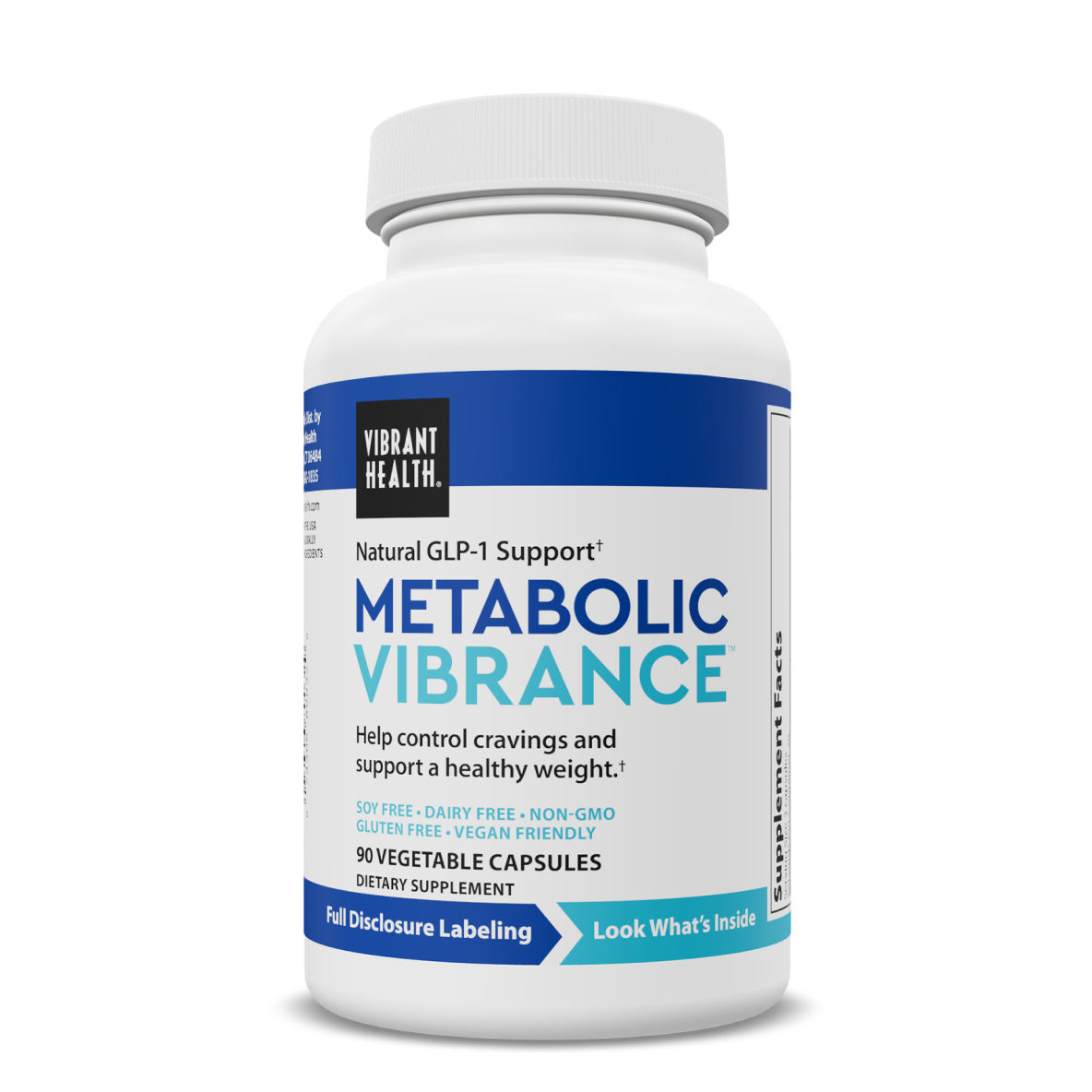
Bitter melon is one of the botanicals in Metabolic Vibrance, currently at Version 2.1, in a 90 vegetable capsule bottle. Suggested use is up to three capsules daily, taken with meals.
In this formula it appears alongside Indian tinospora, cinnamon, chromium, vanadium, alpha-lipoic acid, and fiber-rich plant extracts. On the Vibrant Health product page, bitter melon's role is described as supporting glucose metabolism and metabolic balance.
Every ingredient and every amount is printed on the panel. No proprietary blends. No hidden fillers. That's Full Disclosure Labeling, and it's the practice that lets you run the five-point check above on our label instead of taking our word for anything. The version number on the front does the same job over time, since Dynamic by Design™ means the formula gets revised as the science does.
The takeaway
Extract or whole fruit isn't a strength question. It's a format question. Cook the fruit and you get fiber, vitamin C, and a vegetable. Take a well-documented extract and you get a consistent daily amount of specific plant compounds without the flavor.
What separates a good bitter melon supplement from a vague one isn't the concentration ratio on the front. It's whether the label tells you enough to check it. For more on the fruit itself, see our guide to bitter melon, or browse the full Ingredientopedia.
Frequently asked questions
Is bitter melon extract stronger than eating the fruit?
It's more concentrated in specific compounds, which isn't the same as stronger overall. An extract carries more of whatever the solvent pulled out per gram, and far less fiber, water, and vitamin C than the fresh fruit.
What does a 10:1 extract ratio mean?
It means roughly ten parts of raw plant material were used to produce one part of finished extract by weight. It describes the input, not the output. Two products with identical ratios can contain very different amounts of any given compound depending on the solvent and process used.
What is charantin?
Charantin is a mixture of steroidal compounds found in bitter melon fruit. It's the compound researchers most often measure when quantifying bitter melon extracts, which is why some standardized products list it on the label.
Does cooking bitter melon reduce its nutrients?
Heat and processing time affect heat-sensitive nutrients like vitamin C. Research on dried bitter melon found that vitamin C and total phenolic content declined more as drying temperature and microwave power increased. Shorter cooking at lower heat retains more.
Should bitter melon capsules be taken with food?
Metabolic Vibrance is formulated to be taken with meals, up to three capsules daily. Always follow the suggested use printed on the label of whichever product you're taking, and check with your healthcare provider before starting any new supplement.
Sources
- Saeed F, Afzaal M, Niaz B, et al. Bitter melon (Momordica charantia): a natural healthy vegetable. International Journal of Food Properties. 2018;21(1):1270-1290. https://doi.org/10.1080/10942912.2018.1446023
- Pitiphanpong J, Chitprasert P, Goto M, et al. New approach for extraction of charantin from Momordica charantia with pressurized liquid extraction. Separation and Purification Technology. 2007. https://www.sciencedirect.com/science/article/abs/pii/S1383586606002966
- Optimization of ultrasound-assisted extraction of charantin from Momordica charantia fruits using response surface methodology. Journal of Pharmacy and Bioallied Sciences. 2015. https://pubmed.ncbi.nlm.nih.gov/26681889/
- US Department of Agriculture, FoodData Central. Balsam-pear (bitter gourd), pods, raw. https://fdc.nal.usda.gov/food-details/1548192/nutrients
- Nguyen TVL, Nguyen QD, Nguyen PBD, Tran BL, Huynh PT. Effects of drying conditions in low-temperature microwave-assisted drying on bioactive compounds and antioxidant activity of dehydrated bitter melon (Momordica charantia L.). Food Science & Nutrition. 2020. https://www.ncbi.nlm.nih.gov/pmc/articles/PMC7382151/
- Effects of wall materials on the physicochemical properties of spray-dried bitter gourd (Momordica charantia L.) powders. https://www.ncbi.nlm.nih.gov/pmc/articles/PMC11190200/
This article is for informational purposes only and has not been evaluated by the FDA. This product is not intended to diagnose, treat, cure, or prevent any disease.
Why Trust Vibrant Health?
At Vibrant Health, we've been pioneers in science-backed nutrition for over 30 years, formulating transparently sourced superfood supplements that prioritize real results. Our blog is an extension of that commitment—a trusted resource for expert-driven wellness insights.
Every article is crafted with nutrition expertise, backed by the latest scientific research, and reviewed by our in-house Certified Health Coaches and Product Educators. We break down complex health topics into practical, actionable advice—helping you make informed choices about superfoods, supplementation, and holistic wellness. As a brand that has earned thousands of 5-star reviews and the trust of health professionals, we ensure that our content reflects the same quality, integrity, and transparency as our products.
Your wellness journey deserves accurate, credible, and empowering guidance. That's why Vibrant Health's blog is here—to help you live a healthier, more vibrant life, backed by real expertise
Jodi Schneider
Certified Health Coach and Product Consultant at Vibrant Health
Jodi Schneider is a Certified Health Coach and Product Consultant at Vibrant Health, with a Nutrition and Healthy Living Certification from Cornell University. For nearly six years, she's helped customers navigate their wellness journey, making nutrition simple and approachable. Passionate about holistic health, she believes wellness is about balance—nourishing the body, staying active, and caring for emotional well-being. Outside of work, you'll find her hiking with her dogs, meditating, or fueling her day with Spectrum Vibrance
Next to Read
Science
Which Form of Zinc Should You Take?
Zinc labels list the form in the fine print, and it matters less than you'd think. Here's how oxide, gluconate, citrate, glycinate, and picolinate compare in human studies, where the research runs thin, and which habits shift absorption as much as the form you buy.
October 05, 2026
RecipesHow Do You Make a Low Sugar Green Smoothie?
Most green smoothies are really fruit smoothies with some spinach added. If you want yours less sweet, split up the two jobs fruit does. Frozen vegetables and a little fat handle texture. Berries, citrus, and spice handle flavor. Here's the build, plus one frozen-vegetable safety step most recipes skip.September 28, 2026
RecipesWhat Goes in a Post-Workout Greens Smoothie?
A post-workout smoothie needs protein, carbohydrate, and fluid. A greens powder isn't any of the three, and building the shake around it is how people end up with something that doesn't do the job. Here's the order that works, and where greens genuinely fit.
September 21, 2026

Start Feeling Your Best Today
You know what we stand for, now it’s time to experience it for yourself. Start your wellness journey with trusted formulas that support real, lasting change.

Free Shipping on Orders $55+
Skip the fees—shipping's on us when you spend $55 or more.

30-day Satisfaction Guarantee
Not feeling the difference? Return it within 30 days—no questions asked.

Subscribe & Save
Stay consistent, save money—get your favorites delivered on your schedule.
As Seen In


